
How Solar Panels Work on an Ontario Home: A Plain-English Guide
How Solar Panels Work on an Ontario Home: A Plain-English Guide
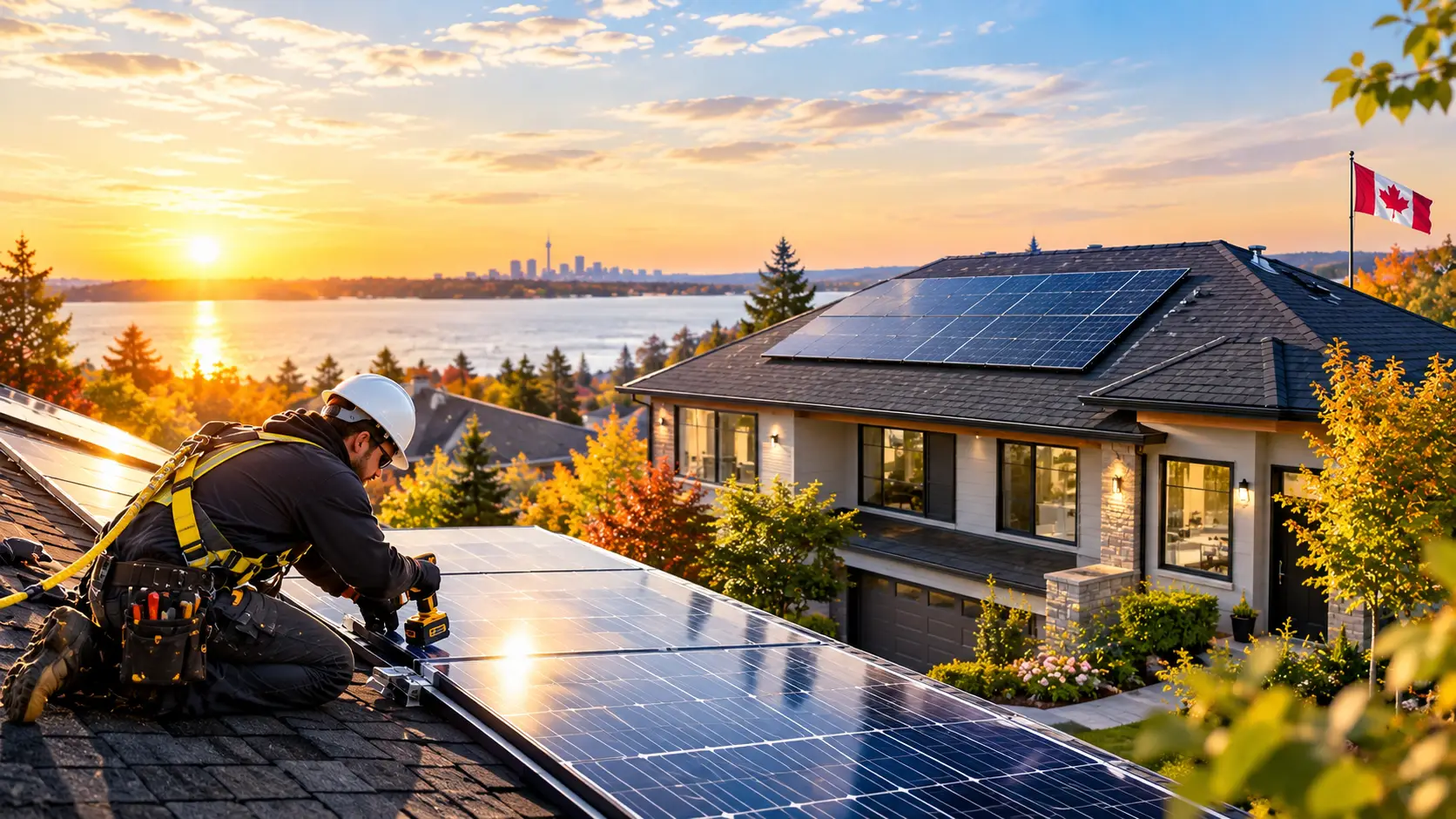
Solar panels sit quietly on a roof, yet many homeowners are not sure what they actually do all day. In short, they turn sunlight into electricity your home can use, and the rest can go back to the grid. Here is how the pieces fit together, what happens in an Ontario winter, and what to know before you start asking for quotes.
What solar panels actually do
A solar photovoltaic (PV) system converts sunlight into electricity. Natural Resources Canada (NRCan) describes PV as a safe and reliable source of solar electricity that produces no on-site pollution or emissions. The panels themselves have no moving parts. When light hits the cells, they produce direct current (DC) electricity.
Your home runs on alternating current (AC), so a device called an inverter sits between the panels and your electrical panel and converts one to the other. The inverter also manages how the power flows. According to Vivion’s solar page, the panels generate power, the inverter manages it, and a battery, if you have one, stores it for later use.
Where the electricity goes
Most Ontario homes with solar stay connected to the utility grid. NRCan explains that grid-connected systems generally send excess electricity to the grid, and they can also include storage. In practice, your home uses solar power first when the sun is out. If the panels make more than the house needs, the extra flows out to the grid. At night or on dark winter afternoons, you draw from the grid as usual.
That is why a solar system lowers how much power you pull from the grid, but does not usually replace the grid altogether.
Net metering: how the extra power is credited
In Ontario, the program that handles this is called net metering. According to the Ontario Energy Board (OEB), your utility bills you for the electricity you draw from the grid and gives you a credit for the renewable electricity you send back. The Ontario government’s net metering page adds that the power you send to the grid is valued at the same rates you pay for electricity.
- Credits can carry forward. Both pages say unused credits can be carried forward for up to 12 months. After that, the OEB says they are reduced to $0.
- Credits have limits. The OEB notes that credits can only offset the electricity you consumed (kWh), not other charges such as delivery or taxes.
- Your utility has to agree first. The OEB says you sign a net metering agreement and apply to connect to the grid, and the province advises not buying equipment or signing a contract until your utility approves the project. Some areas may not allow a connection because of limits in the local system.
These rules are set by the province and your utility, so check the official pages below for the details that apply to you.
What about Ontario winters?
It is a common worry that snow and cold shut solar down. NRCan says PV cells perform even better at low temperatures, which is one reason the technology suits the Canadian climate. Other parts of a system, such as batteries, may perform worse in the cold and may need protection.
NRCan also cautions that monthly production estimates are only indicative, because they do not account for temperature, snowfall or year-to-year changes in sunshine. In other words, output is lower in winter, and nobody can promise an exact number for your roof. NRCan notes that its estimates for most systems should land within about 10 per cent, and that well-functioning systems typically lose about 0.6 per cent of output per year and are expected to last 25 years or more.
Roof direction and tilt
NRCan’s solar resource maps show production for several set-ups, including horizontal panels and fixed south-facing panels at different tilts. The takeaway for homeowners: how your roof faces and slopes matters, and so does shade from trees or neighbouring buildings. Those details are looked at during a consultation, not guessed from the street.
Solar and a battery: how they fit together
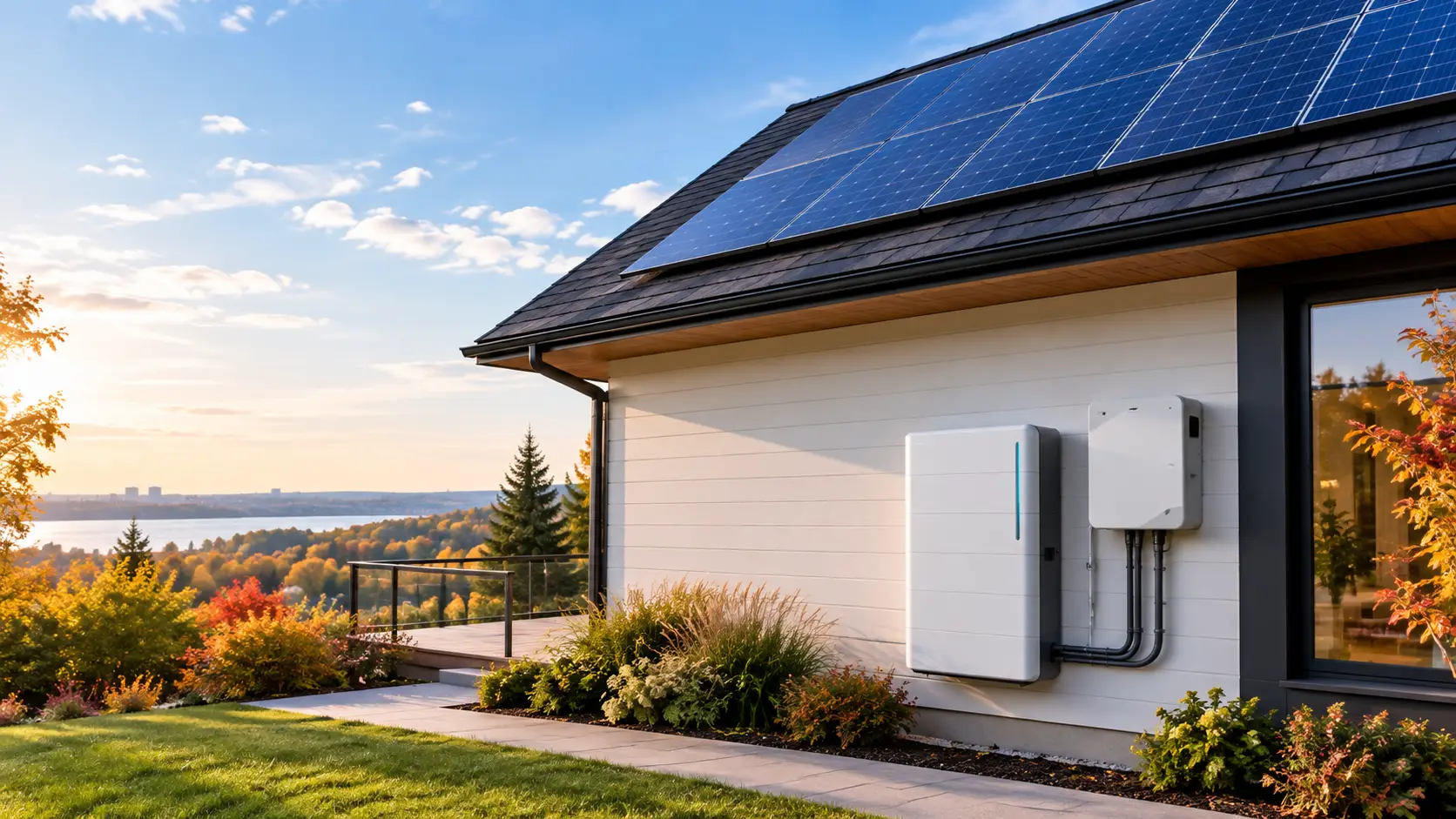
Solar makes power when the sun shines, and a home battery lets you keep some of it for later. Vivion’s solar page says solar can work together with batteries, hybrid inverters and EV chargers. A hybrid inverter is simply an inverter that can handle both the panels and a battery in one unit.
A battery will not necessarily run your whole home in an outage, and the amount of backup depends on the system and the home, so that is worth discussing before you decide.
What about rebates?
As listed on the Home Renovation Savings program website on October 19, 2026, rebates of up to $10,000 are shown for solar panels and battery storage, under upgrades that do not require a home energy assessment. The page says terms and conditions apply to specific rebates and that savings are estimates, and it does not give per-unit rates or an end date for this rebate. Check the program pages for current details. Eligibility depends on program rules – we can help check during your consultation.
A quick word on safety
Solar is electrical work, not a do-it-yourself project. The Electrical Safety Authority (ESA) says the person doing the electrical work files a notification of work, and that if you hire a Licensed Electrical Contractor, they will file it. If you ever see sparks or smell burning near any electrical equipment, leave the area and call 911, then contact your installer.
Questions to bring to a consultation
- How does my roof’s direction, slope and shading affect a solar system?
- Can my local utility connect a system at my address, and what does it need from me?
- Would I like to add a battery now, or leave room to add one later?
- Which Home Renovation Savings rebates might apply, and what are the program’s terms?
Vivion Energy installs solar PV systems for homes across Ontario, and you can book a free consultation with us to talk through your roof, your goals and your options.
Sources
- Natural Resources Canada: Solar Photovoltaic Energy in Buildings
- Natural Resources Canada: Photovoltaic potential and solar resource maps of Canada
- Ontario Energy Board: Net metering
- Ontario.ca: Save on your energy bill with net metering
- Home Renovation Savings program
- Save on Energy: Home Renovation Savings
- Electrical Safety Authority: How do I notify ESA about electrical work?
- Vivion Energy: Solar panels
Information is current as of October 19, 2026. Programs and rates can change, so check the official source or contact us before making decisions.