
Before You Install: Answers on Roofs, Electrical Panels, Heat Pump Noise and Licensed Installers
Before You Install: Answers on Roofs, Electrical Panels, Heat Pump Noise and Licensed Installers
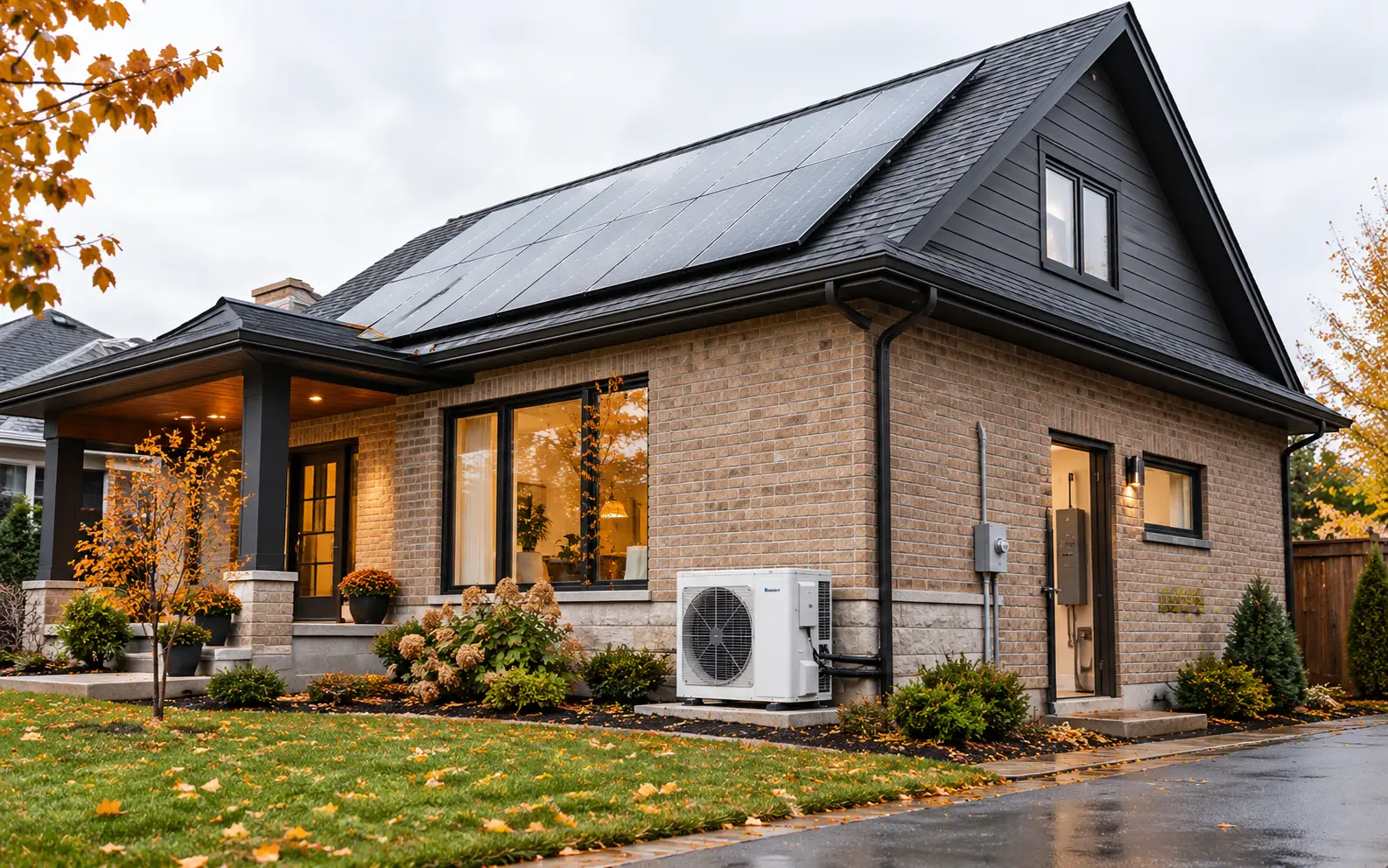
Most of the questions homeowners ask before solar or a heat pump are not about rebates or rates. They are about the house itself: the roof, the panel in the basement, the noise ouide the bedroom window, and who is allowed to do the work. Here are five plain-language answers, based on official sources.
1. Does my roof need to be in good shape before solar?
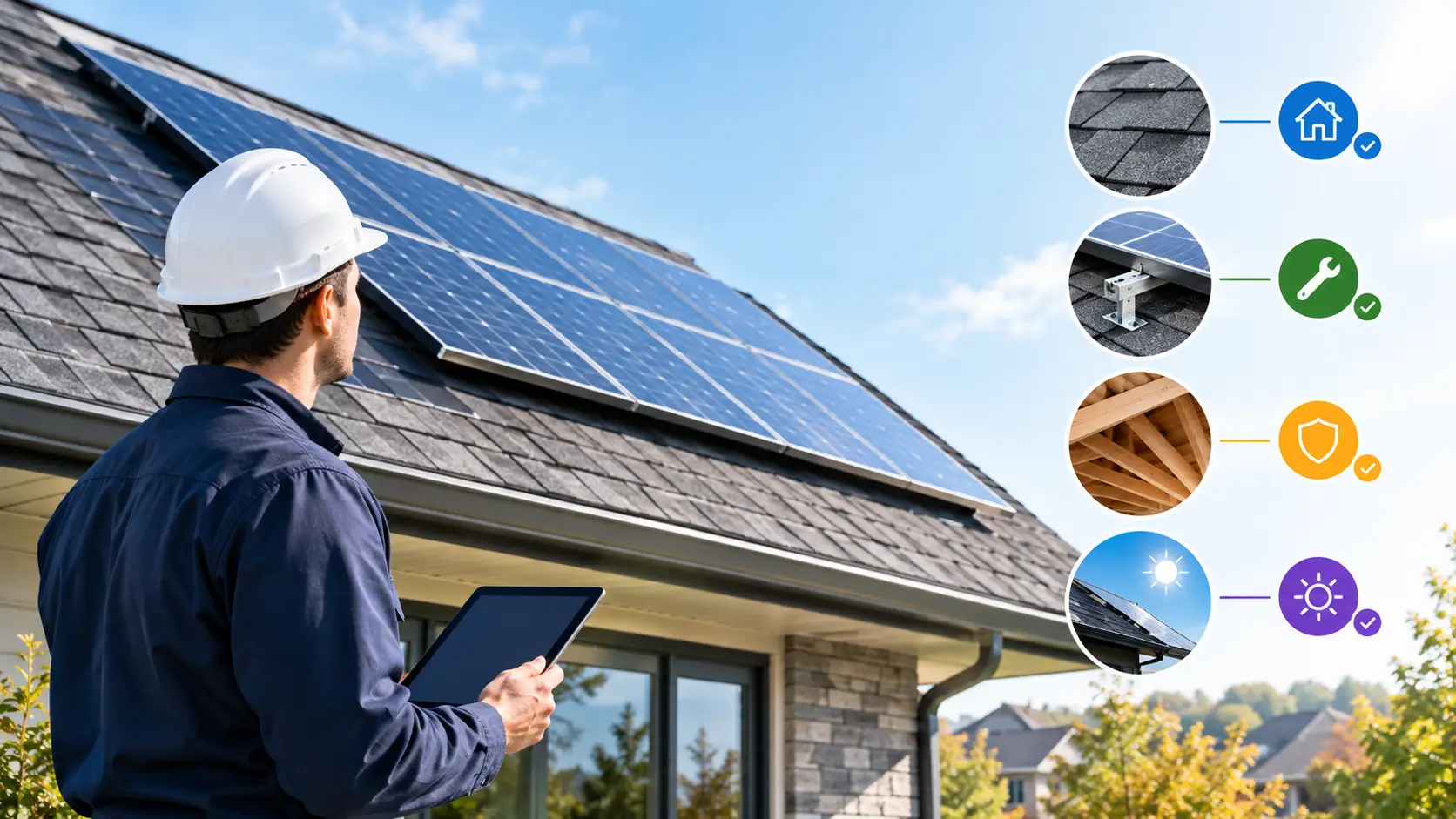
Yes, the roof matters, but there is no simple age or condition cut-off in the official material we checked. Natural Resources Canada’s Planning and Decision Guide for Solar PV Systems (a 2020 publication) says a home needs to be structurally ready for a solar array and describes assessing shading as part of planning. In everyday terms, that means someone qualified should look at how the roof is built, how the panels will attach, and what shades it through the day.
If your roof covering is close to needing replacement, that is worth raising early, so the two jobs can be planned together. The guide is written mainly for builders and designers, so a roof and structure check by a qualified installer is the practical step.
2. Will I need an electrical panel upgrade for a heat pump?
Possibly, and the answer depends on your home. Your electrical service is the amount of power your home can draw, measured in amps (A). Natural Resources Canada’s heat pump page (last modified December 24, 2025) says an add-on air-source heat pump generally does not require a service upgrade, though the age of the service and the home’s total electrical load may make one necessary. For an all-electric heat pump setup, it says a 200 A service is normally required, and that switching from gas or oil may call for a panel upgrade.
Another Natural Resources Canada page, a set of case-study videos, notes there is typically room on a 100 A service for a moderately sized heat pump system. Because these official sources differ, the fair answer is that a qualified contractor needs to assess your home’s actual load. We are not quoting costs, because we could not confirm a current official figure.
3. How loud is a heat pump?
Heat pump sound is rated in decibels (dB). According to Natural Resources Canada, most heat pumps have a sound rating of 76 dB or lower. The same page notes that ducts can cause noise issues if airflow is not right. It does not give guidance on where to place the outdoor unit.
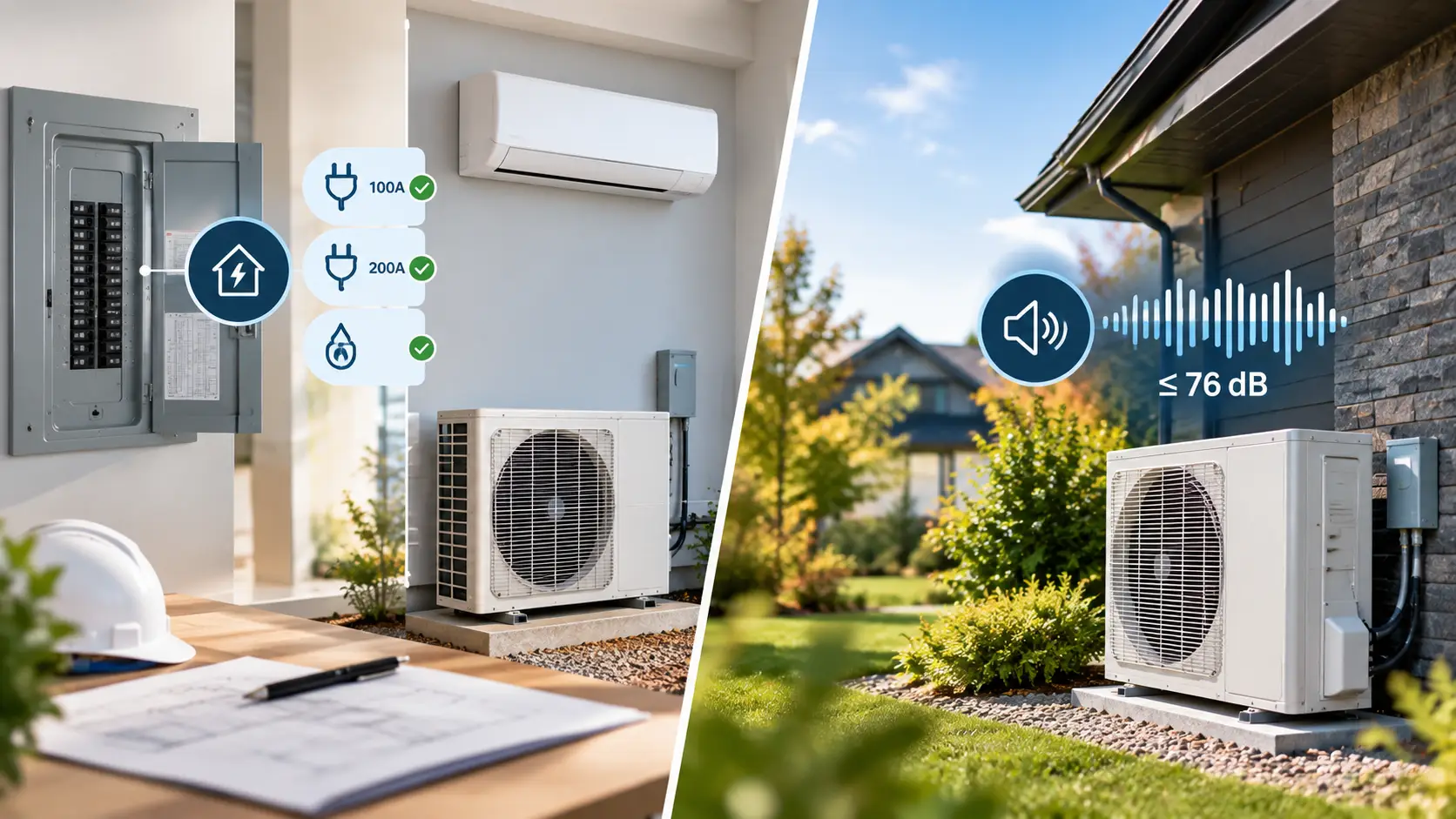
A good question for any installer is to ask for the manufacturer’s sound rating of the unit being proposed, and where it would sit relative to bedrooms and your neighbours. Sizing also plays a part, which we cover in our post on heat pump sizing.
4. How do I check that an installer is licensed to do electrical work?
In Ontario, the Electrical Safety Authority (ESA) says Licensed Electrical Contractors are the only businesses legally authorized to do electrical work in your home. Ask to see the contractor’s seven-digit ECRA/ESA licence number, then check it using ESA’s Find a Contractor tool, which is linked from ESA’s hiring page.
ESA also says work must be reported to ESA through a notification of work before it starts, and that it is a red flag if a contractor asks you to file it in your name. Once the work is reviewed and passed, ESA issues a Certificate of Acceptance, which ESA says is worth keeping for insurance and resale. Vivion is an ESA Licensed Electrical Contractor.
5. What do warranties cover?
Product warranties come from the manufacturer and follow the manufacturer’s own terms, so read them before you sign. Vivion also offers optional extended warranties for ducted and ductless heat pumps and for water heaters, with labour-only or labour and parts coverage for 2 to 5 or 2 to 10 years. Exact terms are given in writing with your quote, so compare them side by side.
One last tip
Write your questions down before any visit. Roof, panel, noise and licensing questions are all fair game, and a good installer will welcome them.
If you would like to talk any of this through for your own home, we invite you to book a free consultation with Vivion Energy.
Sources
- Natural Resources Canada – Planning and Decision Guide for Solar PV Systems (2020)
- Natural Resources Canada – Heating and cooling with a heat pump (modified Dec. 24, 2025)
- Natural Resources Canada – Best practices in heat pumps (modified Nov. 6, 2025)
- ESA – Hire a Licensed Electrical Contractor
- ESA – Finding the Right Contractor
- ESA – Obtain a Certificate of Acceptance
- Vivion Energy – Heat pumps
- Vivion Energy – Why Heat Pump Sizing Matters
Information is current as of October 30, 2026. Programs and rates can change, so check the official source or contact us before making decisions.