The New Heat Pump Rebate, Made Simple
The New Heat Pump Rebate, Made Simple
The federal government’s National Heat Pump Rebate has raised plenty of questions since its rules were posted. Below are plain answers, taken only from the official program page, plus a few honest “it doesn’t say yet” replies where the details are still to come.
1. How much is the rebate, and who gets the higher amount?
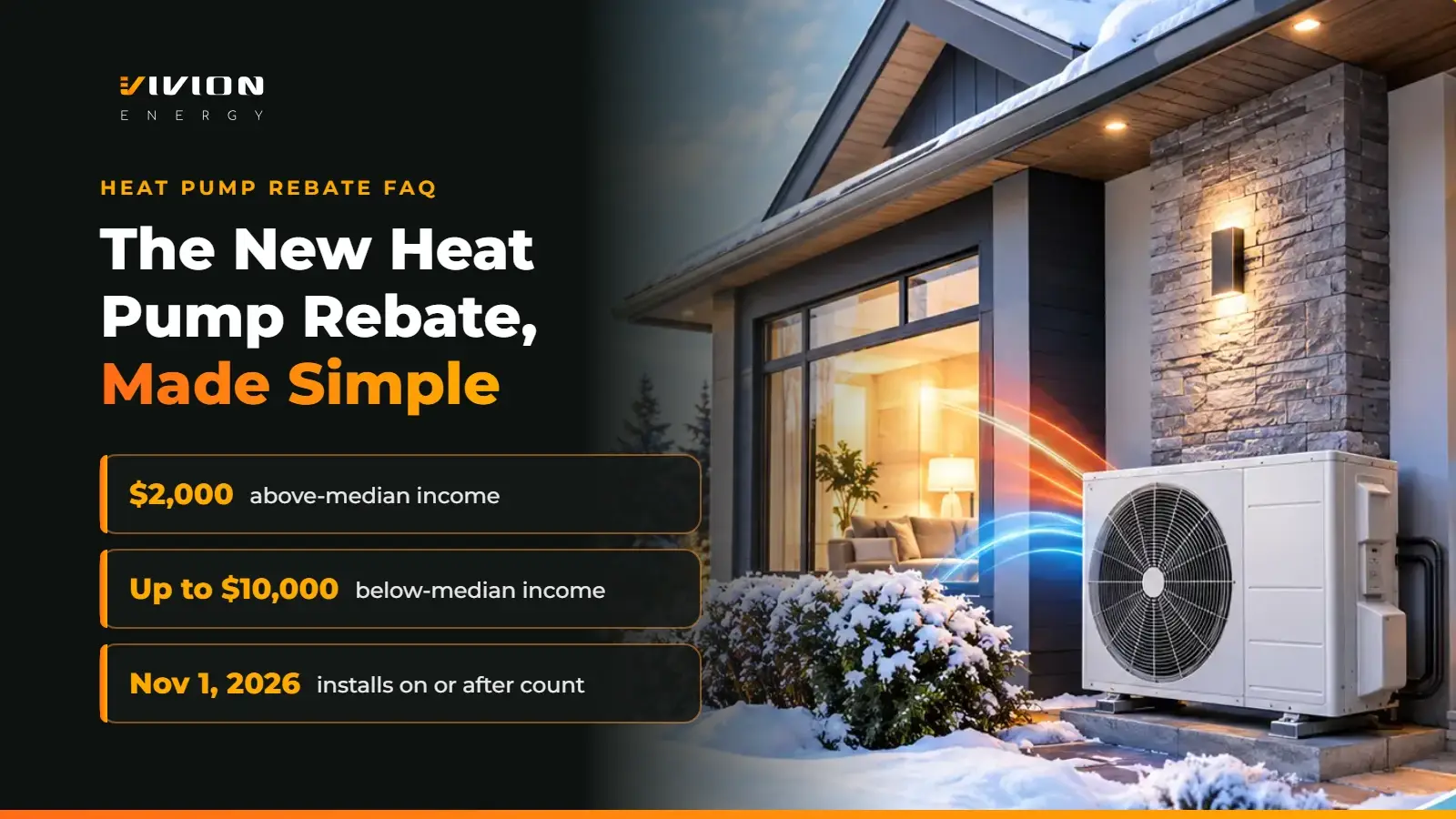
According to the Government of Canada program page (last updated November 13, 2026), for eligible installs on or after November 1, 2026:
- $2,000 for households with above-median income.
- Up to $10,000 for households with below-median income. The actual amount depends on household income and the cost of the equipment installed.
Eligibility depends on program rules – we can help check during your consultation.
The higher amount is based on after-tax household income, compared with a threshold for your province and household size. The program page lists these Ontario thresholds, in 2025 dollars (based on Statistics Canada 2021 data, adjusted for inflation):
- 1 person: $46,981
- 2 persons: $92,884
- 3 persons: $119,850
- 4 persons: $146,217
- 5 persons or more: $158,202
The page explains how the government calculates after-tax income and notes that the higher amount will require applicants to provide their Social Insurance Number in the application so the Canada Revenue Agency can verify income. Read the official page for the full details.
2. Who can apply?
The program page says the applicant must live in Canada and own the home. It does not have to be your main residence, so a rental property you own can count. Other rules include:
- No previous federal funding for a heat pump at that address.
- One rebate per household, even if the household owns more than one property.
The page adds that rented or leased heat pumps may be eligible after the program launches, with details to come.
3. Which heating fuels qualify?
Homes currently heated with electricity (an electric furnace or baseboards), natural gas, heating oil, propane, diesel, coal and/or wood are listed. One honest note from the same page: for homes heated with natural gas, switching to a heat pump may not lower heating bills, depending on your region, the system chosen and other factors. That is worth weighing alongside comfort and the rebate.
4. Does my old system have to be broken or removed?
No. The page says both emergency and planned replacements are accepted, your existing system does not have to be removed, and you do not need to show that it broke down. If your heat fails this winter, getting safe heat back comes first. If you are still choosing a style, our guide to ducted vs ductless heat pumps can help.
5. I had a heat pump installed on or after November 1, 2026. What now?
The rebate is retroactive to November 1, 2026. If you meet the rules and installed an eligible heat pump on or after that date, the page says you may apply once the program opens. In the meantime:
- Keep your contractor’s receipt. The program lists specific details it must show, including the AHRI number, and says receipts must be submitted within 6 months. Our rebate checklist walks through the product list, AHRI number and receipt details.
- Sign up for program updates from the government.
Keep in mind that the page says no payments will be made until the program launches and applications are approved, funding is not guaranteed until approval, and eligibility is judged on the rules in effect on your installation date. Program details are still being finalized and may change.
6. When does the program open and close?
The online portal is expected in early 2027, and the program is expected to close in March 2034. No exact launch date has been announced on the program page.
7. How do I spot a rebate scam, and where do I report it?
The government says it is aware of misleading door-to-door and phone sales that mention the rebate. According to the program page, Environment and Climate Change Canada does not go door-to-door to inspect, sell or rent heating equipment, and it is not making marketing calls. It recommends that you contact qualified HVAC companies yourself.
If you think you have been targeted, the page asks you to report it to PNRT-NHPR@ec.gc.ca, your local police, and a consumer protection office. In Ontario, that is Consumer Protection Ontario, listed in the directory of provincial and territorial consumer offices.
8. Can I combine it with other rebates, and how long will approval take?
The federal page does not say yet. It does not address combining this rebate with Ontario’s Home Renovation Savings Program or utility offers, how long approval will take, or how payments will be made. Check each program’s own rules, and watch the official page for updates.
9. Can Vivion help me plan a heat pump?
Yes. Vivion serves all of Ontario and installs both ducted and ductless heat pumps, and a heat pump sizing audit is part of our process. We are also a participating contractor in the Home Renovation Savings Program. Eligibility for any rebate depends on program rules – we can help check during your consultation.
Have more questions about heat pumps or the rebate? Book a free consultation with Vivion Energy and we will talk through your home and options.
Sources
- Government of Canada: National Heat Pump Rebate
- Government of Canada: sign-up to receive updates for the National Heat Pump Rebate
- Natural Resources Canada: heat pump models eligible for the National Heat Pump Rebate
- Canadian Consumer Handbook: provincial and territorial consumer affairs offices
- Vivion Energy: Up to $10,000 Back on a Heat Pump: Your Rebate Checklist
- Vivion Energy: Ducted or Ductless Heat Pump?
- Vivion Energy: heat pumps
- Vivion Energy: contact and free consultation
Information is current as of November 20, 2026. Programs and rates can change, so check the official source or contact us before making decisions.